DECODING MARKETS
General Mills, Inc., based in Minneapolis, Minnesota, stands as a prominent player in the packaged foods industry. Founded in 1866, the company has cultivated a diverse portfolio of consumer brands, operating through four key segments: North America Retail, International, Pet, and North America Foodservice. General Mills markets well-known products such as Cheerios, Haagen-Dazs, and Betty Crocker, which cater to a wide array of customers, including grocery stores, restaurants, and e-commerce retailers. As a major constituent of the consumer defensive sector, its continued focus on innovation positions General Mills as a significant entity within a market that has recently come under scrutiny, suggesting a hold recommendation for investors amidst current market conditions.
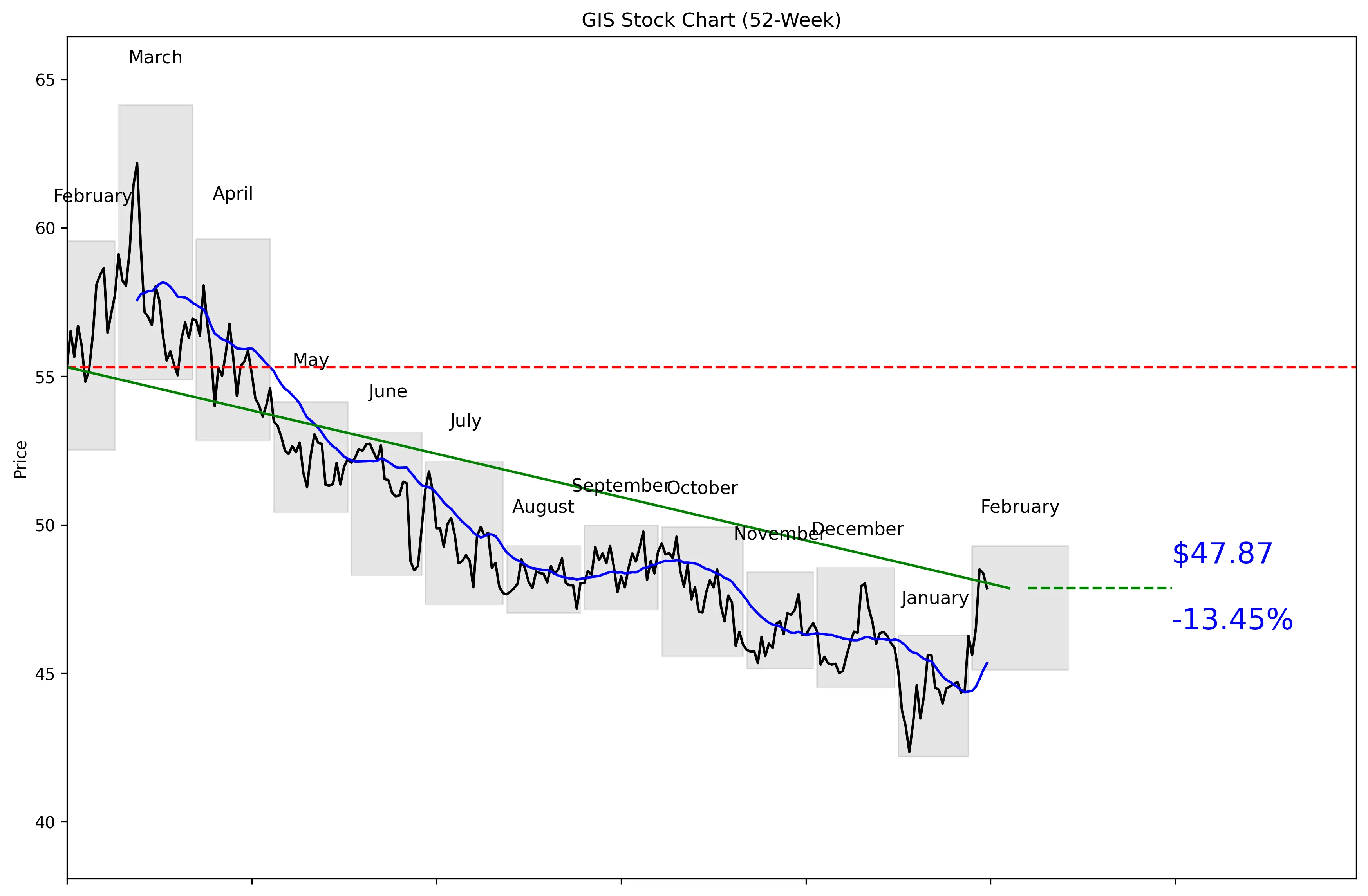
52-Week Price Performance Chart
General Mills' stock has encountered notable volatility over the past year. Currently priced at $46.56, shares have displayed a downward trend from a 52-week high of $67.35 to a recent low of approximately $45.15. This decline illustrates a 25.57% drop over the year and highlights sustained selling pressure.
The technical analysis reveals key levels essential for investors: - Resistance Level: The robust resistance level established in January remained entrenched around $65 and has not been tested in recent months. - Support Level: A significant support level has emerged at approximately $46, where the stock recently showed signs of a minor rebound.
The 50-day moving average, resting at $47.536, has consistently acted as a dynamic resistance point for the stock, indicating persistent bearish sentiment. Price action has struggled to maintain itself above this moving average, reinforcing the downward trend. No discernible bullish reversal patterns have arisen, suggesting that the bearish momentum is prevailing. Nonetheless, recent price action hints at a slight consolidation, signaling market indecision but lacking strong indications of a trend reversal.
General Mills is currently managing a total revenue of approximately $19.16 billion, showcasing operational efficiency despite recent hurdles. An EBITDA of around $3.76 billion reflects the firm's capacity to maintain healthy profitability.
The overall market sentiment surrounding General Mills suggests a cautious investment posturing, following a fundamental analysis that projects modest growth amid market pressures.
In recent weeks, General Mills has faced challenges contributing to its stock slump. On December 2, 2025, shares dropped by 2.9%, hitting a new 52-week low, fueled by declining sales and increased scrutiny over alleged price collusion within the food industry. Added to this, a projected sales decline of 3.3% for the upcoming year raises concerns regarding future demand.
Analyst downgrades have begun affecting market sentiment: - JPMorgan: Downgraded General Mills from Neutral to Underweight on August 20, lowering their price target to $45.00 due to concerns over earnings outlook. - Morgan Stanley: Downgraded as well, with a price target set at $48.00, citing issues in the pet food segment.
Despite these setbacks, General Mills has reaffirmed its fiscal 2025 outlook, projecting organic net sales growth to be flat or marginally positive. The company aims to leverage strategic investments in innovation, particularly with plans to launch Blue Buffalo products in the fresh pet food market. However, profit pressures are anticipated to persist, contributing to the market's guarded approach moving forward.
Analyst sentiment regarding General Mills reflects a neutral stance, with a mean recommendation score of 2.85714 based on 19 analyst opinions. Analysts recommend investors to hold existing positions rather than initiate new purchases or sales. The collective outlook suggests cautious monitoring as the broader market sentiment adjusts to the imminent challenges.
General Mills, Inc. stands at a critical juncture, navigating through turbulent market dynamics. While the company's significant brand equity and solid revenue figures provide a foundation for potential recovery, the current bearish price trend, coupled with market scrutiny, necessitates vigilant monitoring. Investors contemplating positions in General Mills should remain prudent, considering both opportunities in the long-term potential of its product innovation strategies and the immediate risks stemming from recent sales declines and analyst downgrades.
By maintaining a watchful eye on evolving market conditions and operational adjustments, investors can make informed decisions on their holdings in this established player within the consumer defensive sector.
| Metric | Value |
|---|---|
| Market Cap | $24.9b |
| Total Debt | $14.4b |
| Total Cash | $952.9m |
| Shares Outstanding | 533.4m |
| Float Shares | 531.2m |
The information provided in this monthly report is for informational purposes only and should not be construed as financial, investment, or trading advice. AltStation.io does not guarantee the accuracy, completeness, or timeliness of the data and analyses presented. The content is based on publicly available information, and while we strive to ensure its accuracy, errors and omissions may occur.
Investing in stocks, cryptocurrencies, and other financial instruments involves significant risk, including the potential loss of principal. Past performance is not indicative of future results. Readers should conduct their own research and consult with a qualified financial advisor before making any investment decisions. AltStation.io and its affiliates are not responsible for any losses incurred as a result of using this report.
By using this report, you acknowledge that you understand and accept these terms.
Report Updated: December 15, 2025
Data Last Updated: 2026-01-30 12:47:18