
Gilead Sciences, Inc. (GILD) Stock Analysis
By Nova Skye | AltStation.io | Updated September 19, 2026
Company Overview
Gilead Sciences is a major biopharmaceutical company based in Foster City, California, operating in the general drug manufacturing space since 1987. The company discovers, develops, and sells prescription medicines across the United States, Europe, and international markets. Its commercial foundation is built on antiviral therapies for HIV-1, headlined by treatments like Biktarvy, Descovy, Genvoya, and Sunlenca. Beyond HIV, Gilead sells liver disease treatments including Epclusa, Livdelzi, and Vemlidy, alongside Veklury for COVID-19 and AmBisome for serious fungal infections.
Gilead is an entrenched market leader in antiviral treatments, but it operates as a challenger in oncology and cell therapy. Its primary edge is a dominant, cash-generative HIV franchise, though sustaining that position requires continuous lifecycle management. To diversify away from virology concentration risk, Gilead has built an oncology footprint with its CAR T-cell therapies Yescarta and Tecartus, as well as Trodelvy. It aggressively reinforces its competitive position through external dealmaking with partners like Merck, Arcus Biosciences, and Merus.
Right now, Gilead is executing a strategic pivot to establish itself as a diversified oncology and immunology player. While mature antiviral drugs still fund daily operations, the company is directing substantial focus toward cancer immunotherapies and specialized drug development. Key collaborative efforts underscore this push, including trispecific antibody research with Merus and small molecule programs with LEO Pharma and Terray Therapeutics. Gilead needs these pipeline alliances to deliver commercial hits to secure its next leg of revenue growth.
52-Week Price Performance Analysis
Recent News and Developments
Gilead opened a five-story research center in Foster City focused on oncology, inflammation and research data science. The facility supports about 325 employees, including 260 laboratory scientists, and is part of Gilead’s planned $32 billion U.S. investment through 2030. Source: Nasdaq
Assembly Biosciences exercised its option to fund 40% of U.S. development costs and receive 40% of U.S. profits from Gilead’s herpes simplex virus program. GS-1179 is expected to enter a Phase 2 trial for recurrent genital herpes by the end of 2026, while Gilead retains control of development and commercialization. Source: Assembly Biosciences
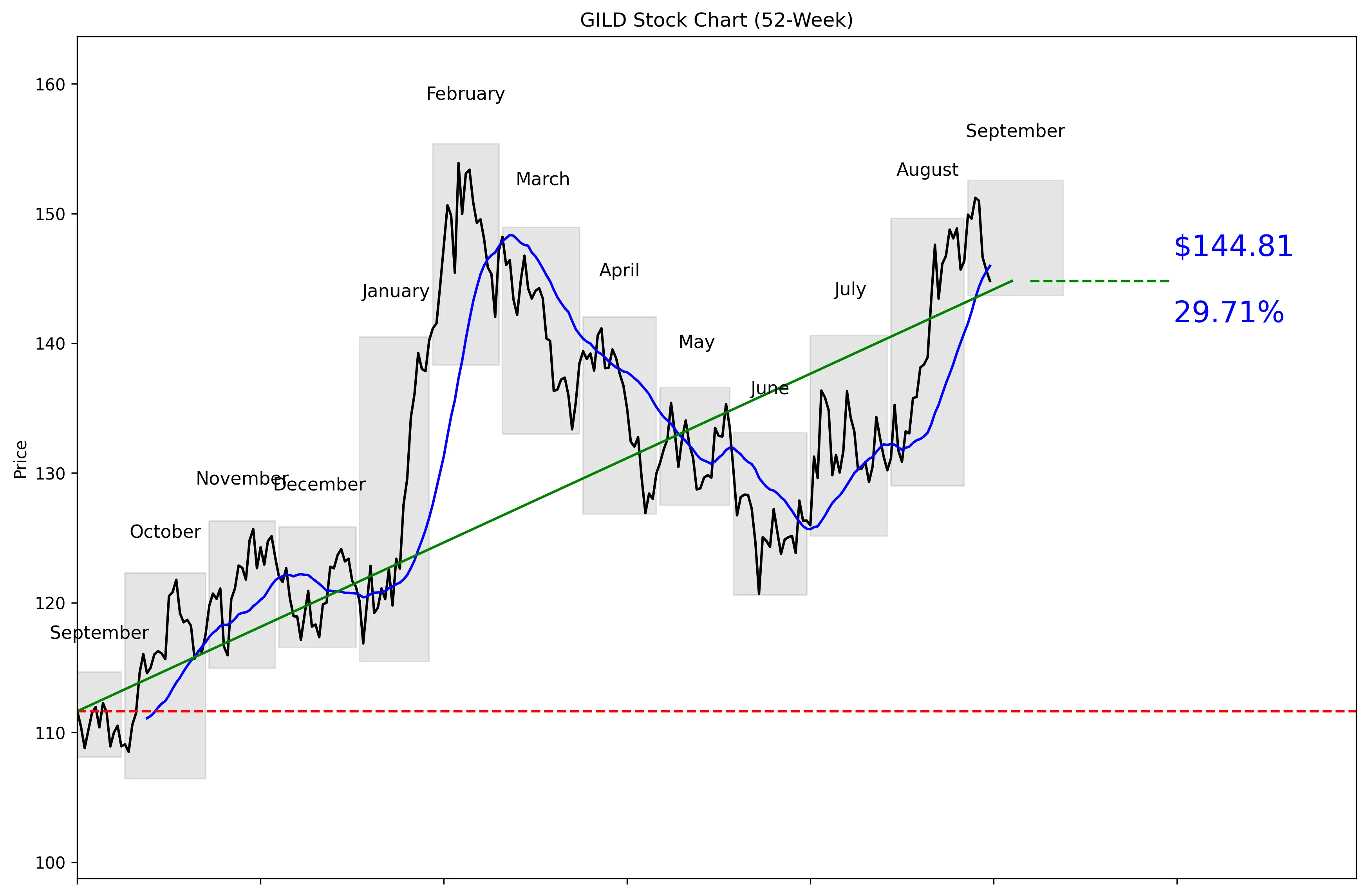
Gilead shares closed at $146.64 on September 8, down 2.88% for the session versus a 0.58% decline in the S&P 500. The stock had still gained 13.48% over the preceding month, beating the medical sector’s 2.73% gain. Source: Zacks
Market Sentiment and Analyst Recommendations
Earnings and Financial Data
Frequently Asked Questions
Related Stock Reports